
Government aluminium decision based on flawed advice
This opinion editorial was published in The Post
OPINION: Last week [Tuesday 14 October] the New Zealand government rejected safeguards against cheap Chinese imports, consigning our world-class aluminium extrusion industry and thousands of skilled roles to the scrap heap.
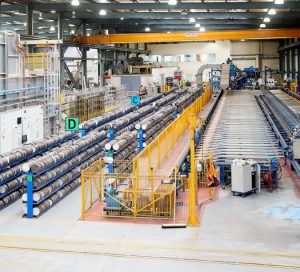
It’s a bad decision for a government elected to be business-friendly given these businesses are worth around $2 billion in revenue and employ more than 2000 people directly and thousands more upstream and downstream.
Minister Cameron Brewer acknowledged that his decision was based entirely on the report prepared for him by officials who assured him that it was comprehensive and accurate, and met the tests imposed by the legislation. In fact, the report contained factual inaccuracies, incorrect assumptions and flawed interpretation of parts of the legislation, resulting in numerous incorrect conclusions. Because the Minister did not test the advice of his officials the shortcomings in the report were not apparent when he made his decision.
MBIE found that New Zealand’s industry has suffered serious injury alongside an increase in imports and concluded that imports were only a minor part of the picture of wider economic downturn, attributing the injury instead to domestic factors.
MBIE’s report focuses heavily on volume of imports and other domestic cost factors. Raw material costs, (globally traded aluminium billet) barely receive a mention in the report, although detailed evidence was provided by three manufacturing members that raw material constituted between 65 to 80% of manufactured cost.
What the report omits is the considerable evidence ALENZ provided both in separate submissions and verification visits is that imports are coming into New Zealand at or below the cost of raw material. Globally all aluminium extruders buy aluminium billet on either the Shanghai Metal exchange or the London Metal Exchange.
ALENZ provided detailed analysis of raw material costs over the investigation period, plotted against the average value of imports, demonstrating the deteriorating value of imports to a point in 2026 when monthly average was at or below raw material costs.
Yes, the market has been tough. But this industry is made up of long-established businesses that have weathered plenty of economic ups and downs in the past – Covid, GFC, oil shocks, and many more.
And this situation is very different in scale and character. In 11 years, imports have risen from 5% to 33% of the market, while arriving at prices below the cost of the raw aluminium from which they are made.
That pricing is only possible with state subsidies, export incentives, huge overbuilding of capacity, and a Chinese construction industry that is a quarter of its 2021 size.
It is difficult to understand how MBIE assessed this evidence yet gave it so little weight. The issue does not even appear in the report’s executive summary.
At the same time as New Zealand is leaving its manufacturers exposed, Australia is taking steps to protect its domestic industry. On 14 October, Australia’s Anti-Dumping Commission announced interim measures while it investigates alleged dumping of Chinese aluminium windows and doors.
The contrast is hard to ignore. Australia already applies duties to Chinese aluminium extrusions and has now found preliminary evidence that dumping and subsidies have harmed its aluminium window and door manufacturers.
Australia is imposing preliminary duties while its investigation continues. Despite its significant trade relationship with China, it is prepared to use WTO-consistent remedies when fair competition is at risk.
New Zealand’s decision leaves our extrusion manufacturers competing in a market where comparable economies have acted while we remain exposed.
Another MBIE focus was that safeguards won’t support our international relations and trade goals.
We get that. China takes around 25% of New Zealand exports, largely from our world-class primary sector. But 36% of Australian exports go to China and it hasn’t stopped them from acting.
We are also a world-class industry that can compete with anyone with quality, service, technical capability, and productivity that are up with the best in the world.
MBIE also raised concerns about costs to downstream manufacturers and consumers. Let’s be clear. Aluminium extrusion is only one component of most finished products and the proposed safeguard mechanisms would principally affect unfairly traded product.
This isn’t just about protecting existing businesses, it’s about protecting New Zealand sovereignty and retaining the capacity to manufacture aluminium components and supply hundreds of businesses that depend on local technical expertise, short lead times and responsive production.
And to back an industry that has put on hold $280 million worth of investment in low-carbon technology innovation and a pipeline of skilled jobs.
What we are asking for is fair competition using a legitimate WTO remedy. Every other aluminium producing nation uses some form of trade remedy against subsidised and predatory-priced imports.
What evidence would persuade the New Zealand Government that the risks of losing domestic manufacturing capability are greater than the risks of a carefully designed trade remedy?
Australia is standing up for its manufacturing sector.
We are asking the Minister or future Ministers to act with pragmatism and courage: urgently initiate a new investigation, require MBIE to fast-track the application, put provisionals in place and ensure the law is applied as written and in line with international practice.